


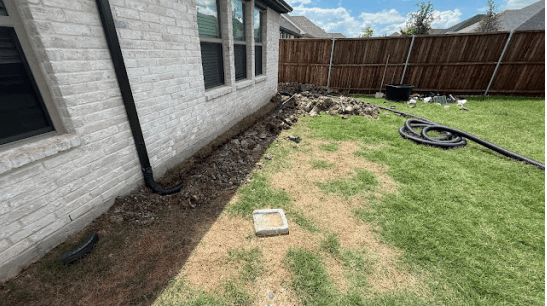
The Purpose of a French Drain
As we all know, Texas weather can be unpredictable. Recently, we have had numerous days in a row with heavy rain. After many days of consistent rain, was your yard left soggy? Did you have water pooling in different areas or around your foundation? If so, you know the frustration that comes alongside poor drainage. That’s where a French drain comes in a simple but highly effective solution for redirecting excess water away from your home or yard. A French drain a pipe that helps direct surface water and groundwater away from problem areas.
Why Install a French Drain?
- Reduce Soil Erosion: Excess water can erode soil over time, especially on slopes. French drains slow water flow and guide it safely downhill, preserving your landscape.
- Protect Foundation: Standing water near your home’s foundation can cause cracks, shifting, or mold growth. A properly installed French drain keeps this moisture at bay.
- Improve Yard Drainage: Low spots in your yard can become muddy or unusable. French drains intercept the water before it accumulates, keeping your lawn healthier and more functional.
- Support Driveway and Hardscape Integrity: Water pooling on driveways or patios can weaken surfaces over time. French drains redirect runoff and extend the life of your outdoor structures.
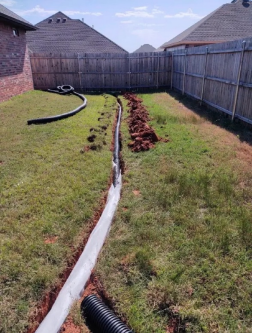
How A French Drain in Installed?
Step 1: Plan the Drain Path
First, determine where water collects and where you want it to go. The French drain should slope slightly (about 1 inch for every 8 feet) away from your home or problem area to ensure water flows naturally.
Tip: Call your local utility company before digging to avoid hitting buried lines.
Step 2: Dig the Trench
Dig a trench about 6 inches wide and 12-18 inches deep along the planned path. The trench should slope downhill toward a safe drainage area, dry area.
Step 3: Lay the EZ-Flow Pipe Lay an EZ-flow pipe along the designed path with a pop-up emitter. The black pipe is surrounded with NDS Poly-Rock and then covered with geotextile fabric that is crush proof and has a 100-year life span. This wrapping helps absorb water without debris, inside the pipe, and transports it to a safe drainage area.
Step 4: Test the Drain
After installation, test the drain by running a hose at the entry point to ensure water is flowing out the end of the drain as intended.
Step 5: Fill the hole
Once you are confident that the drain is working correctly, fill the trench back with dirt to cover the pipe and level your yard.
Final Thoughts
Installing a French drain requires effort, and while this landscape project is attainable to be completed as an at home project by the homeowners, B&C Landscaping is a family owned business ready to assist in solving your drainage issues.
By: Kimberlee Ramirez